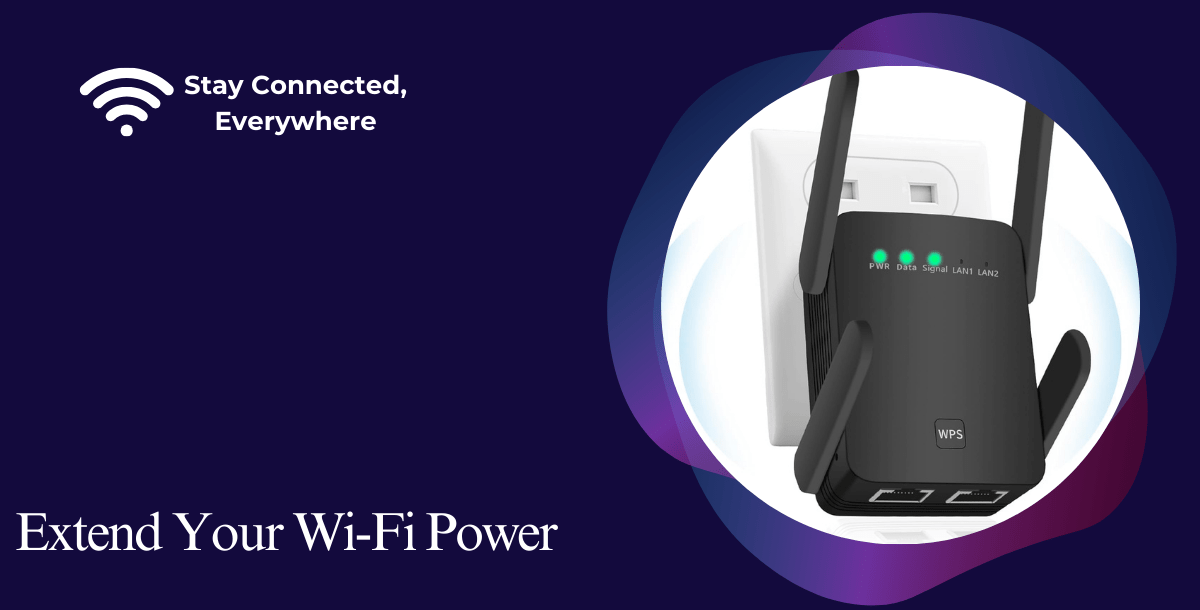
WiFi Range Extender
A WiFi Range Extender is a device used to extend the coverage area of an existing wireless network. It works by receiving the signal from your main WiFi router and rebroadcasting it to areas where the signal is weak or unreachable. WiFi range extenders are especially useful in large homes, offices, or places with thick walls that can block or weaken WiFi signals.
Here’s some more detailed content on WiFi Range Extenders:
Increased Coverage Area
Wi-Fi Range Extension: The primary purpose of an extender is to increase the coverage area of an existing network, such as Wi-Fi. It helps in eliminating dead spots or weak signals in certain areas of a house or office.
Easy Setup and Installation
Plug and Play: Many extenders come with a simple plug-and-play setup. Some models offer easy installation through mobile apps or a web-based interface.
Multiple Frequency Bands
Dual-Band Extenders: Many modern extenders support dual-band or tri-band technology, working on both the 2.4 GHz and 5 GHz bands. This helps to balance traffic and avoid congestion on the network.
Support for Multiple Devices
Device Connectivity: Extenders allow multiple devices (such as smartphones, laptops, and smart home devices) to connect to the extended network, ensuring consistent performance across various devices.
Ethernet Ports for Wired Connection
Wired Connection Support: Many extenders include Ethernet ports that allow you to connect wired devices (such as gaming consoles, desktop computers, or smart TVs) directly to the extended network, providing a stable and fast connection.
Security Features
WPA2/WPA3 Encryption: Extenders typically support WPA2 or WPA3 encryption standards to secure the network and prevent unauthorized access.
Signal Strength Indicators
LED Indicators: Extenders usually feature LED indicators to show the strength of the incoming signal and the quality of the extended network. This helps in placing the extender in an optimal location for the best performance.
Compatibility with Existing Networks
Universal Compatibility: Extenders are usually compatible with most routers and modems, regardless of the brand, making them versatile for various network environments.
Compact and Discreet Design
Small and Portable: Many extenders are designed to be compact and unobtrusive. They are easy to install in different locations and can be plugged into a wall outlet.
Features Of Extender
An extender is a device that extends the range of a network or signal. It is commonly used in networking, Wi-Fi, or even home entertainment systems. Below are some key features of a network extender (such as a Wi-Fi extender) and its uses:
What is a WiFi Range Extender?
A WiFi Range Extender (also known as a WiFi repeater or booster) is a device that amplifies an existing WiFi signal to extend the coverage area.
How Does a WiFi Range Extender Work?
The WiFi extender works by connecting wirelessly to the existing router's network. It then amplifies and rebroadcasts the signal, extending its range.
Key Features of a WiFi Range Extender
Compatibility with Existing Routers: WiFi extenders are usually compatible with most routers, regardless of the brand, making them a versatile addition to your network.
Types of WiFi Extenders
Mesh WiFi Extenders: Mesh WiFi systems come with multiple units that work together to create a single, unified network across a large area. Mesh extenders are ideal for large homes.
Benefits of Using a WiFi Range Extender
Improved Signal Strength: With a WiFi extender, areas with weak signals will experience a stronger and more stable connection, allowing users to stream, browse, and work without interruptions.
Limitations of a WiFi Range Extender
Interference: Like any wireless device, WiFi extenders can be susceptible to interference from other devices like microwaves, cordless phones, and other WiFi networks, which can affect performance.
How to Set Up a WiFi Range Extender
Connect to the Extender: Use a computer or mobile device to connect to the extender’s WiFi network (which is usually named after the extender brand or model).
Compatibility with Existing Networks
Backwards Compatibility: Some extenders are designed to work with older Wi-Fi standards (such as Wi-Fi 4 or Wi-Fi 5), allowing them to extend the range of legacy devices.
Compact and Discreet Design
Small and Portable: Many extenders are designed to be compact and unobtrusive. They are easy to install in different locations and can be plugged into a wall outlet.
F.A.Q
Frequently Asked Questions
How to login into your extender?
Logging into your Wi-Fi extender allows you to configure settings, update firmware, change your password, and more. Follow these simple steps to access the extender’s admin panel:
How to reset password of wifi extender?
Resetting the password of your Wi-Fi extender can help you regain access, improve security, or update network settings. You can reset either the Wi-Fi network password or the admin login password, depending on what you need.
How to reset the extender?
If your Wi-Fi extender is not working properly, or you've forgotten the login credentials, performing a reset can restore it to factory default settings. This process removes all custom configurations and allows you to set up the device from scratch.
How often should I update my WiFi extender's firmware?
Updating your Wi-Fi extender’s firmware is essential for maintaining performance, stability, and security. Firmware updates fix bugs, enhance features, and patch vulnerabilities — keeping your network running smoothly.
Can I use a WiFi extender with any router?
A Wi-Fi extender connects to your existing router's wireless signal and rebroadcasts it to extend coverage to areas with weak or no signal. Because it’s just repeating the signal, the extender doesn’t require the router to be from the same manufacturer.
Can I use a WiFi extender outdoors?
Yes, you can use a Wi-Fi extender outdoors, but it must be specifically designed for outdoor use. Standard indoor extenders aren’t built to withstand outdoor conditions such as moisture, temperature changes, and dust. For a strong and reliable outdoor connection, using the right equipment is key.
What is the best location for a WiFi extender?
Placing your Wi-Fi extender in the right spot is essential to maximize coverage, eliminate dead zones, and ensure strong, stable internet throughout your home or office. A poorly placed extender can result in weak signals or slow speeds.